Build or buy? See where eng teams are landing




February 17, 2026-Murali Balusu, Vasanth Balakrishnan
We benchmarked Claude Sonnet 4.6's adaptive thinking on production incident investigations. Sonnet 4.6 at medium effort came close to Opus 4.6 at a fraction of the cost.
February 5, 2026
We tested Anthropic's Opus 4.6 on long-horizon AI agent tasks across code, infrastructure, and telemetry. Here's what changed: async coordination, investigative depth, context attention, and latency.

October 1, 2025-Manveer Sahota
Software engineering has embraced code generation, but the real bottleneck is production. Downtime, degradations, and war rooms drain velocity and cost millions. This blog explains why an AI SRE is the critical next step, how it flips the script on reliability, and why it must be part of your AI strategy now.

September 26, 2025-Spiros Xanthos, Gabor Angeli, Bharat Khandelwal
Discover why most AI approaches like LLMs or individual AI agents fail in complex production environments and how multi-agent systems enable truly AI-native engineering. Learn the architectural patterns from our Stanford presentation that help engineering teams shift from AI-assisted to AI-native workflows.

September 17, 2025-Mayank Agarwal, Manveer Sahota
Learn how to evaluate an AI SRE to ensure they run in your unique production environments. This guide explains the five agentic pillars, six key evaluation dimensions, and enterprise readiness criteria that separate production-ready AI SRE from experiments.

August 13, 2025-Manveer Sahota
This blog unpacks the build-versus-buy dilemma for agentic AI SRE. We examine why nearly 95% of internal efforts stall at brittle prototypes like RAG bots and LLM wrappers, what it really takes to design a production-ready multi-agent system, and the strategic questions leaders must ask before committing scarce engineering talent.

June 13, 2025-Varun Krovvidi, Manveer Sahota
Vibe coding" sparks heated debate in software engineering—flow state innovation or production chaos? This review challenges assumptions, exploring how AI-generated code impacts maintainability, production reliability, and operational complexity. Discover what we're not talking about in this evolving shift toward AI-driven development.
May 30, 2025-Spiros Xanthos, Varun Krovvidi
Engineering intuition, while powerful, becomes a bottleneck when it's confined to a few seasoned engineers. This leads to slower incident response and development friction overall. This article explores how inaccessible intuition creates an overhead on teams and proposes that Agentic AI combined with dynamic knowledge graphs can democratize this crucial understanding, making every engineer more effective.

May 22, 2025-Spiros Xanthos, Varun Krovvidi
This blog post explores how Agentic AI can transform software engineering by addressing the deep cognitive challenges engineers face during on-call incidents and daily development. It argues that today's observability tools overwhelm engineers with fragmented data but fail to provide real system understanding. By combining AI agents with dynamic knowledge graphs, Resolve AI aims to replicate engineering intuition at machine scale—enabling proactive, autonomous investigation, and delivering the kind of contextual awareness usually reserved for the most seasoned engineers.
February 7, 2025-Mitch Wakefield
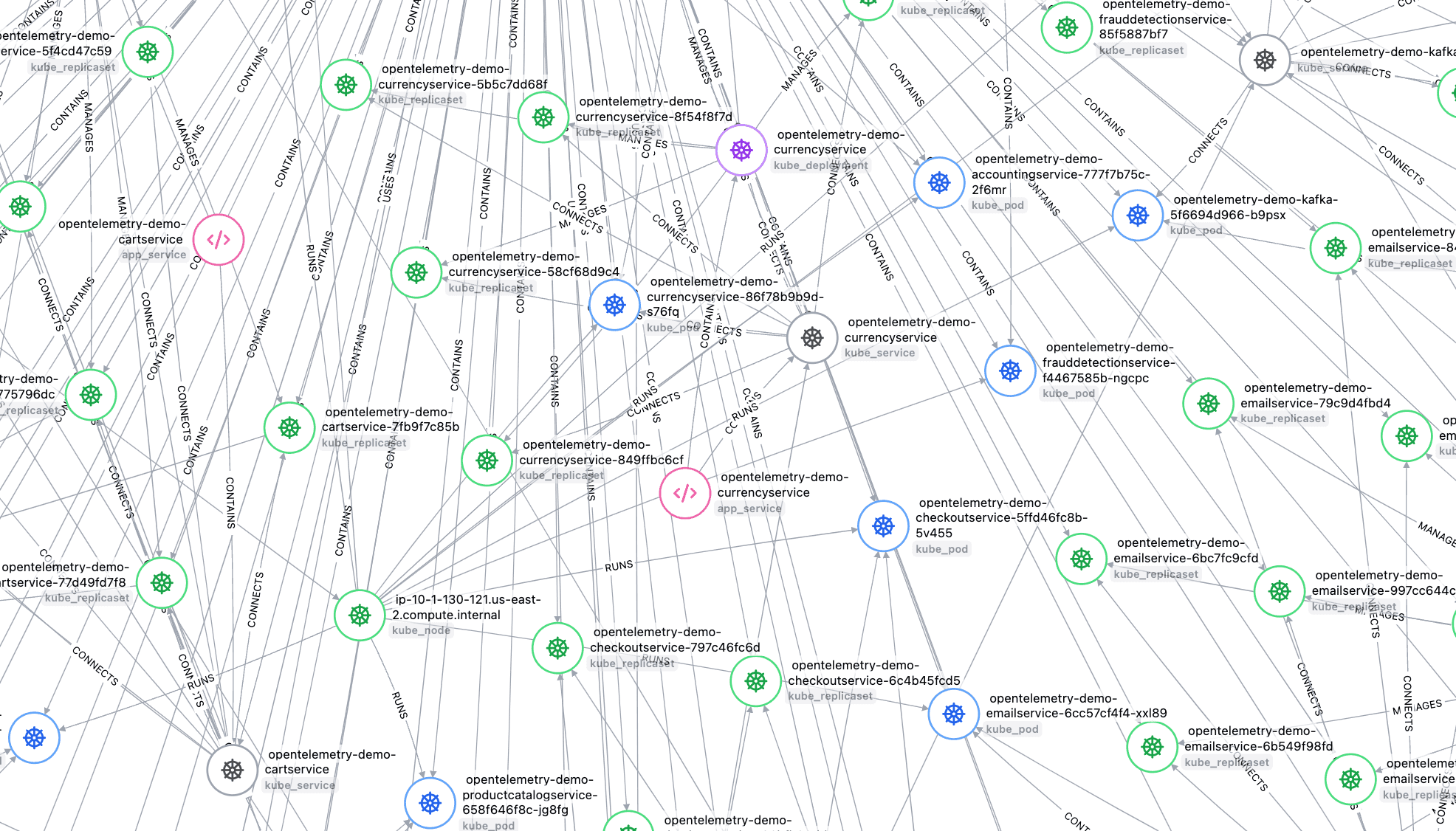
Agentic AI revolutionizes incident management through autonomous, collaborative AI agents that eliminate alert fatigue, maintain dynamic knowledge, conduct consistent investigations, enhance team collaboration, and enable proactive issue resolution—as demonstrated by Resolve AI's platform.