





Loading the page…

Machines on-call for humans

Nick Jonas is a frontend engineer at Resolve AI.
I said yes (reluctantly)
I'm a frontend engineer. I build UI. I sweat the details of each pixel. The closest I've ever been to an incident is watching our SREs stress about them in Slack.
So when someone floated the idea of me going on-call for a week, I won't lie, I was anxious. I'd seen what on-call does to people. The stress, the pages at ungodly hours, the way it takes over your entire life. And these are people who actually know what they're doing. I don't even know how half our backend systems function. I don't have a single Grafana dashboard saved.
But at Resolve we use Resolve, and the whole point of the product is that it's supposed to make incidents manageable for anyone. So the pitch was simple: if Resolve actually works the way we say it does, a frontend engineer like me should be able to survive a week of on-call. And if I couldn't, that's useful feedback too.
So I went for it.
Nobody warned me about this part: when you've never been on-call, you have no baseline for what matters and what doesn't. Experienced SREs see an alert and instantly know if it's worth dropping everything to remediate it. They've seen it before. They know which ones are noisy.
I didn't have any of that. Without context, every alert feels critical, so I treated it that way. I was running out of a movie theater one night. Another time: 3am, laptop open, two questions:
When you don't know what dashboard to pull up, don't know what chart matters, don't know who owns the system that's broken, you're just kind of stuck.
That's where Resolve came in. Every single time, the first thing I did was open Resolve and ask it to give me a breakdown of what happened. And every time, it gave me somewhere to start.
Over the course of the week, I did gradually pick up the rhythm. The terminology started clicking. I got comfortable with how incidents flow, when to check in, who does what. But that was slow.
Resolve was the fast part. By having Resolve give me a breakdown of what happened before pinging anyone else, I could do a real first pass. It would tell me how many orgs were affected, surface latency data, and help me gauge severity before I ever reached out to a human. When I did loop someone in, I wasn't showing up empty-handed.
What surprised me most was how it pointed me to the right people. Resolve would identify the subject matter expert for a given system, so instead of guessing who I should interrupt, I knew exactly who to reach out to and could come prepared with what I'd already found.
Resolve was also pulling relevant PRs and finding code changes that could have contributed to whatever was going wrong. At one point, it wrote a PR for me in a codebase I don't work in. I brought it to the subject matter expert and asked if it was legit. They looked at it and said yeah, this could actually fix it. I went from not knowing what was broken to proposing a fix, all because Resolve connected the dots for me.
No.
The gap between what I know and what you need to know for on-call is massive. Without Resolve bridging that from minute one, I'd just be pinging people nonstop with zero context, waking them up to ask questions I should be able to answer myself.
On-call is basically a second job running in the background of your actual job. It took over at least half my workday, and I was documenting everything for the next handoff, researching systems I'd never touched, trying to understand what I was looking at. It wears on you.
But having done a week with Resolve, I genuinely cannot imagine doing it without. It reminds me of how AI changed the way I write code. Once you've worked that way, you don't really want to go back. If you'd told me a month ago that I'd survive on-call, let alone propose a fix in a codebase I've never touched, I'd have laughed. But that's kind of the point. Resolve doesn't just make on-call easier for the people who already know what they're doing. It makes debugging and understanding production possible for the rest of us.
If you want to give the joy of on-call to your team, book a demo or sign up today
AI for prod ebook
Learn how top engineering teams use AI to run production.
See the agents that run and fix software in action
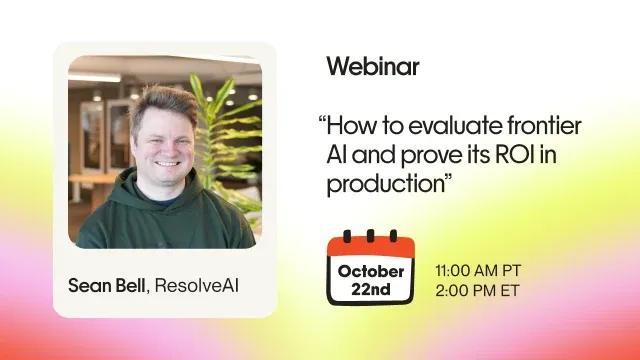
Join our engineering leads for "Behind the Build", a webinar series deep-dive into how we built agents that run software.