




Back
1 min read
How Coinbase Delivers 10x Engineering using AI for Prod
Written by
 Angelo MarlettaStaff Software Engineer
 Josh GroseHead of GTM
On Demand Event | Duration: 45 minutes | Originally aired: January 8, 2026
About This Session
10x engineers are no longer a myth. At Coinbase, AI already sits in incident channels, reads graphs, checks deploy logs, and flags false alarms so humans can focus on the hard problems. Learn how their engineering teams leverage Resolve AI hundreds of times per week to keep shipping velocity high while maintaining world-class reliability.
For more about how Coinbase made investigation time 72% faster, read the Coinbase case study.
What you'll learn:
- How Coinbase runs AI-native ops in production: How AI plugs directly into their incident workflow, joins channels automatically, and collaborates with humans in real time instead of being a separate "AI SRE" tool.
- How to use AI as the first responder for noisy production signals: How Coinbase taught Resolve AI to query custom Datadog events to spot recent Terraform applies or code deployments, and to check a dedicated load testing dashboard so it can quickly flag false alarms.
- How to close the loop on reliability, every day: How Coinbase uses AI for daily SLO check-ins, automated reports on what breached, and continuous back testing so the system gets smarter with every incident.
- A repeatable playbook you can adopt: Concrete patterns and design choices that you can use to move from "AI as an experiment" to "AI as the default way you operate production."
You'll walk away knowing how Coinbase uses AI today to actually run production systems, not just summarize tickets or act as a sidekick in an editor.
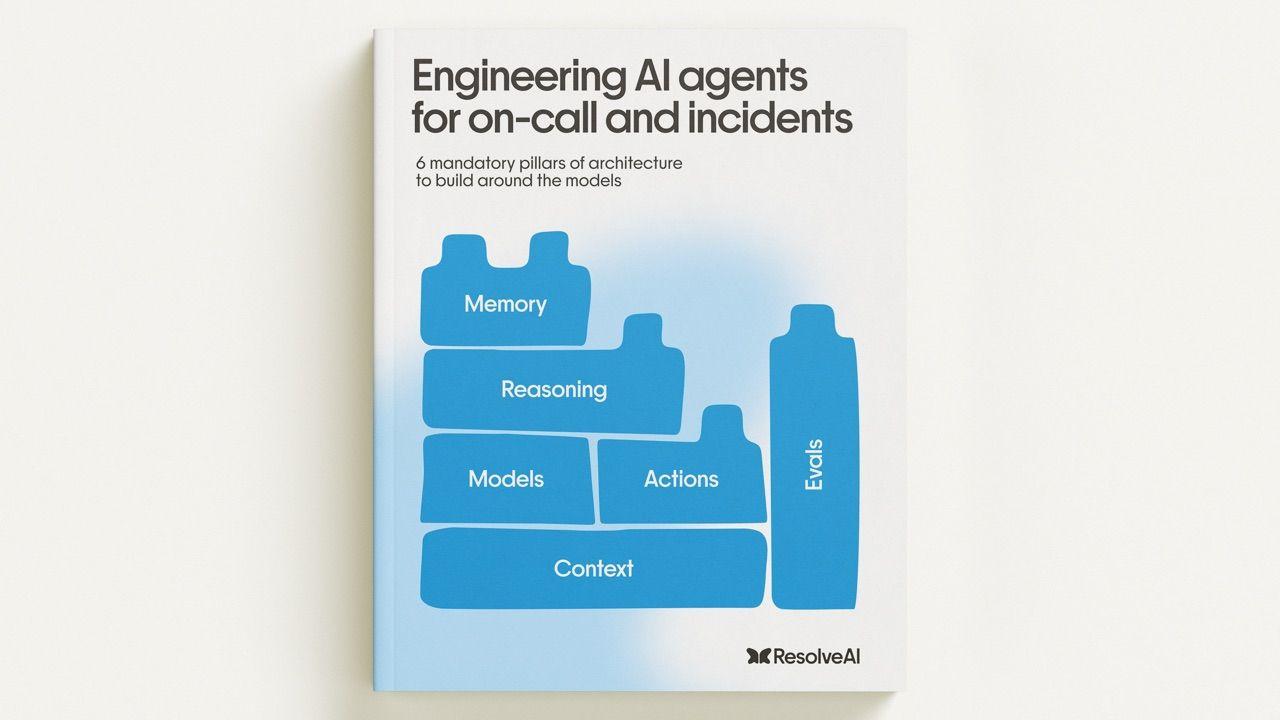
AI for prod ebook
Learn how top engineering teams use AI to run production.
See the agents that run and fix software in action
Join our engineering leads for "Behind the Build", a webinar series deep-dive into how we built agents that run software.