




Loading the page…

Machines on-call for humans

Ask your most senior engineer what happened to their Thursday. A queue of pull requests for code they didn't write, and a production sign-off due by end of day. Teams are signing off on code they didn't write and can't fully trace. Calling that arrangement "a human in the loop" is generous.
What AI changed is the speed of code generation, not the cost of shipping that code to production. What happens after the PR is the same work it always was: security review, infra load assessment, dependency mapping, cross-team coordination, rollback planning. None of that got faster and it got more frequent. The engineer who used to review one carefully considered PR is now looking at ten, with the same bandwidth.
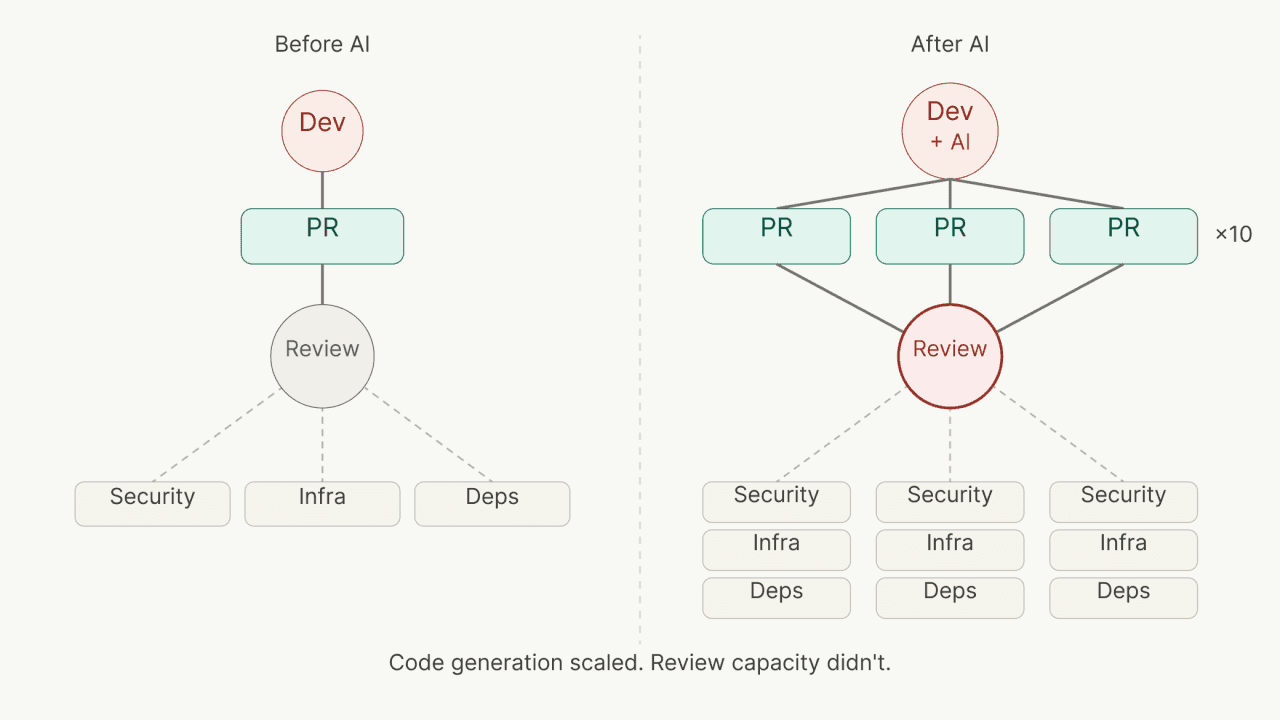
When an engineer wrote the code, a reviewer could ask questions. The reasoning lived somewhere: the author's head, the commit history, a Slack thread. AI-generated code has no author to interrogate. What remains is an artifact without provenance. The reviewer expected to reconstruct security implications, production dependencies, and blast radius from scratch, for every PR in the queue.
There are only three ways this resolves: output gets sloppy, engineers burn out, or you hire more reviewers and the problem scales with you. Most engineering organizations are watching all three happen simultaneously and treating it as a capacity problem.
Modern engineering model needs to change. Writing the code used to be a long horizon task. Now it's running in the background with agents. The expensive work is validating against production, mapping blast radius, and coordinating across teams who own different services. It just lost the person who used to carry the context into it.
For example: AI generates code for your payment flow and your internal dashboard with equal confidence. It has no way to signal which one can afford to be wrong. That distinction used to live in the engineer who wrote it. Now it lands on the reviewer, along with everything else in the queue.
Release cadences were calibrated to human creation speed. Team structures were designed for humans handing work to other humans who could discuss context in real time. Both assumptions broke quietly, while everyone was celebrating how fast the code was shipping.
At Resolve, we've had to build through this directly. What emerged over the past year is a model we didn't plan for: monthly sprints calibrated to production feedback, pod structures with explicit context ownership across service boundaries, engineers working with agents and more. We arrived at it by watching the old model strain under what AI was producing.
Engineers need to be equipped with the right tools and infrastructure to deal with the velocity of AI generated code. Tools that let them easily get to what a change touches, what it could break, and where the blast radius lands. It needs team structures with explicit context ownership and Release cadences that account for validation time. Engineering overall needs better infrastructure.
The question worth asking in your next planning cycle is whether your engineering model was designed for where AI has actually taken you.
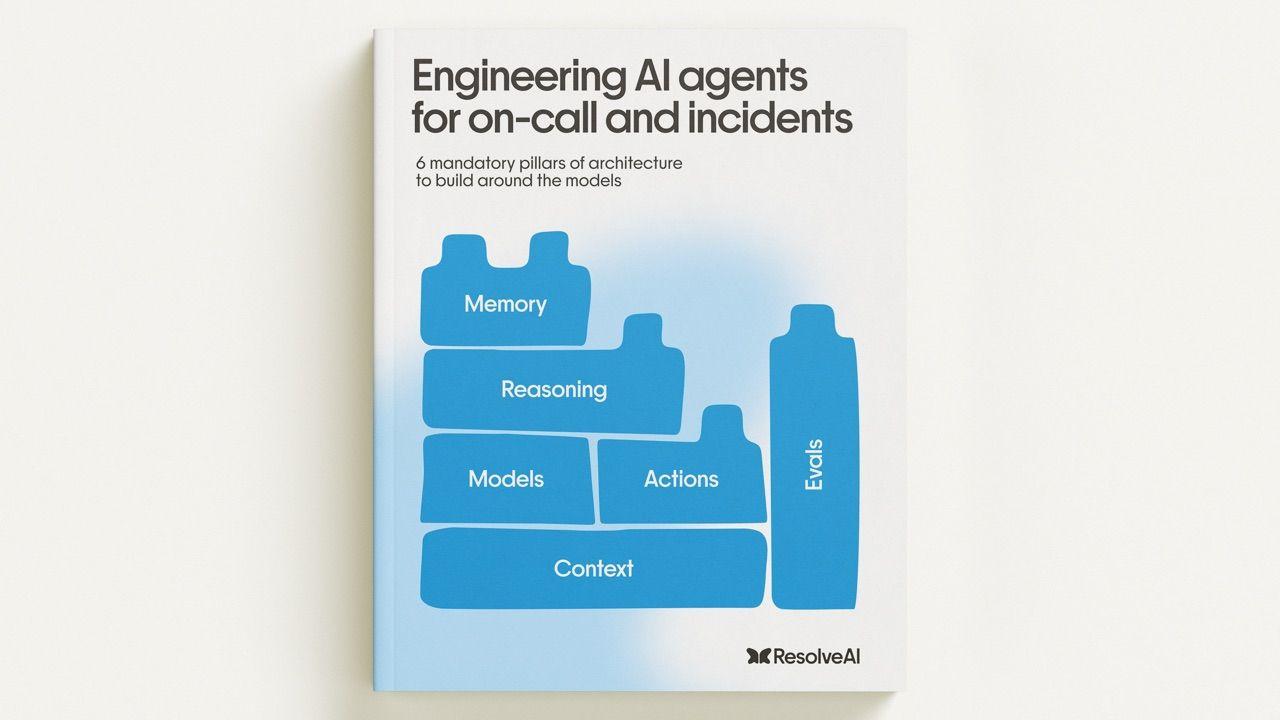
AI for prod ebook
Learn how top engineering teams use AI to run production.
See the agents that run and fix software in action
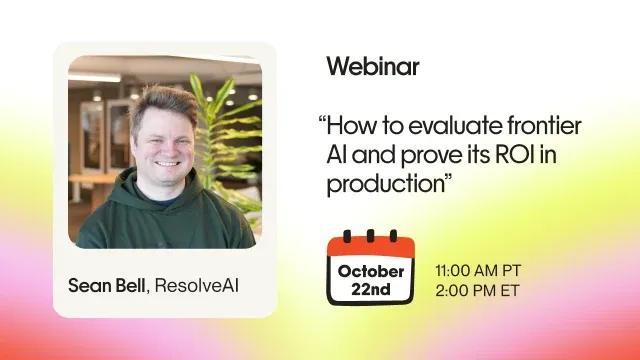
Join our engineering leads for "Behind the Build", a webinar series deep-dive into how we built agents that run software.