Loading the page…

Machines on-call for humans
Machines on-call for humans

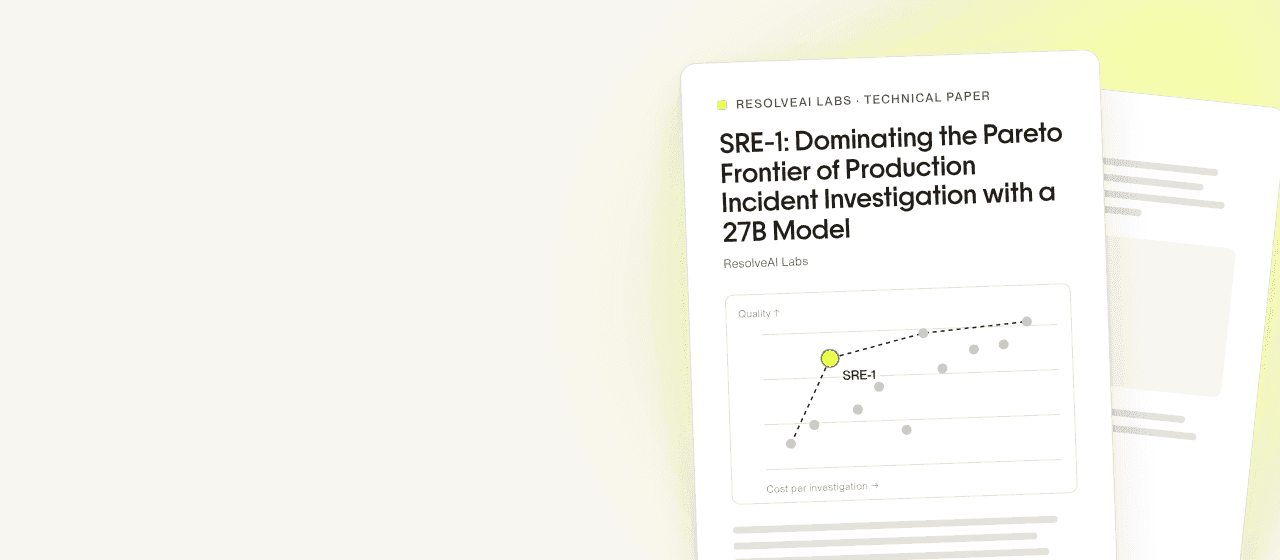
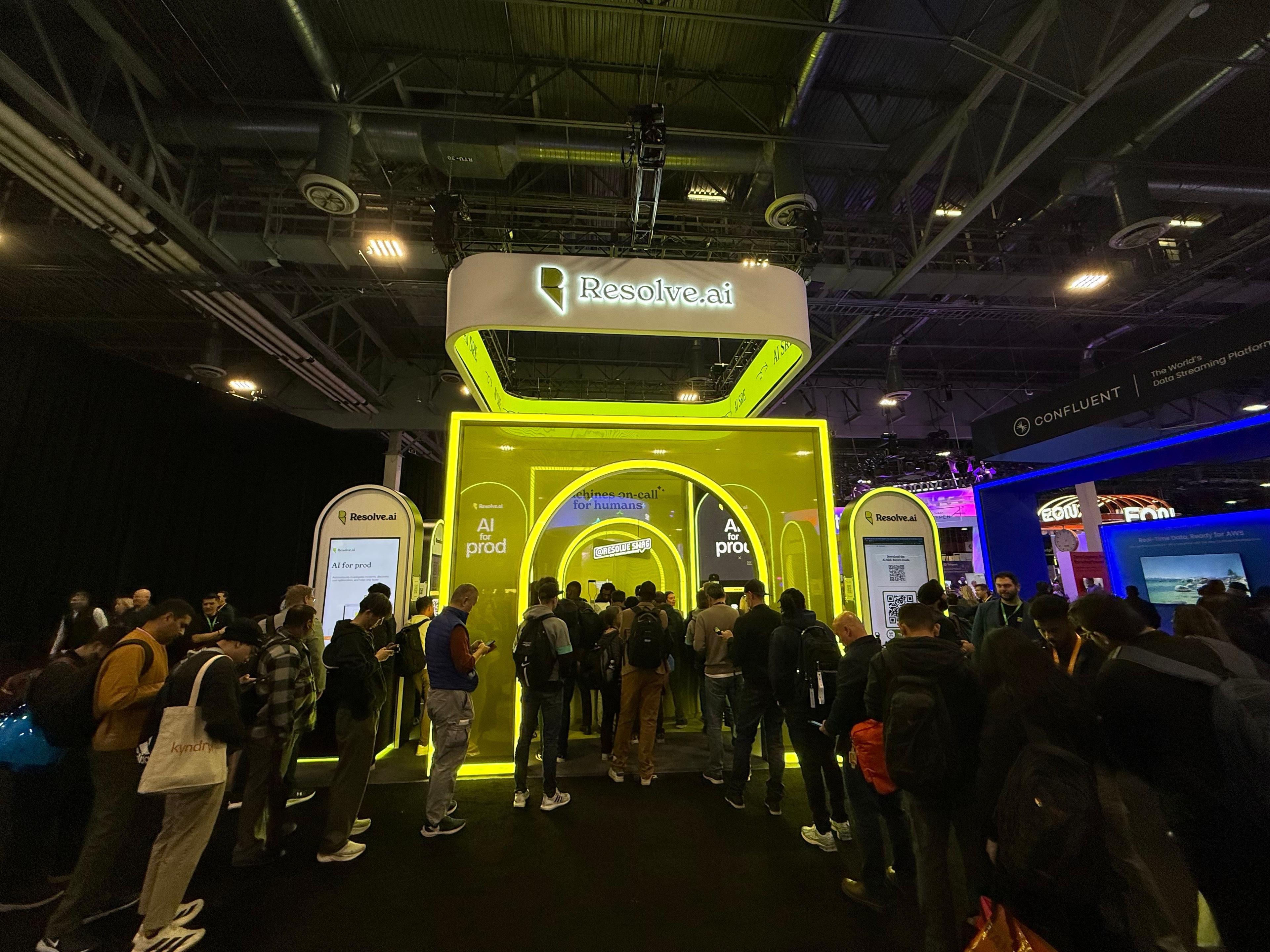
Visit us at Booth #1845 to see a real AI SRE in action
Nov 30 - Dec 4th, 2026Venetian Convention & Expo Center, Las Vegas
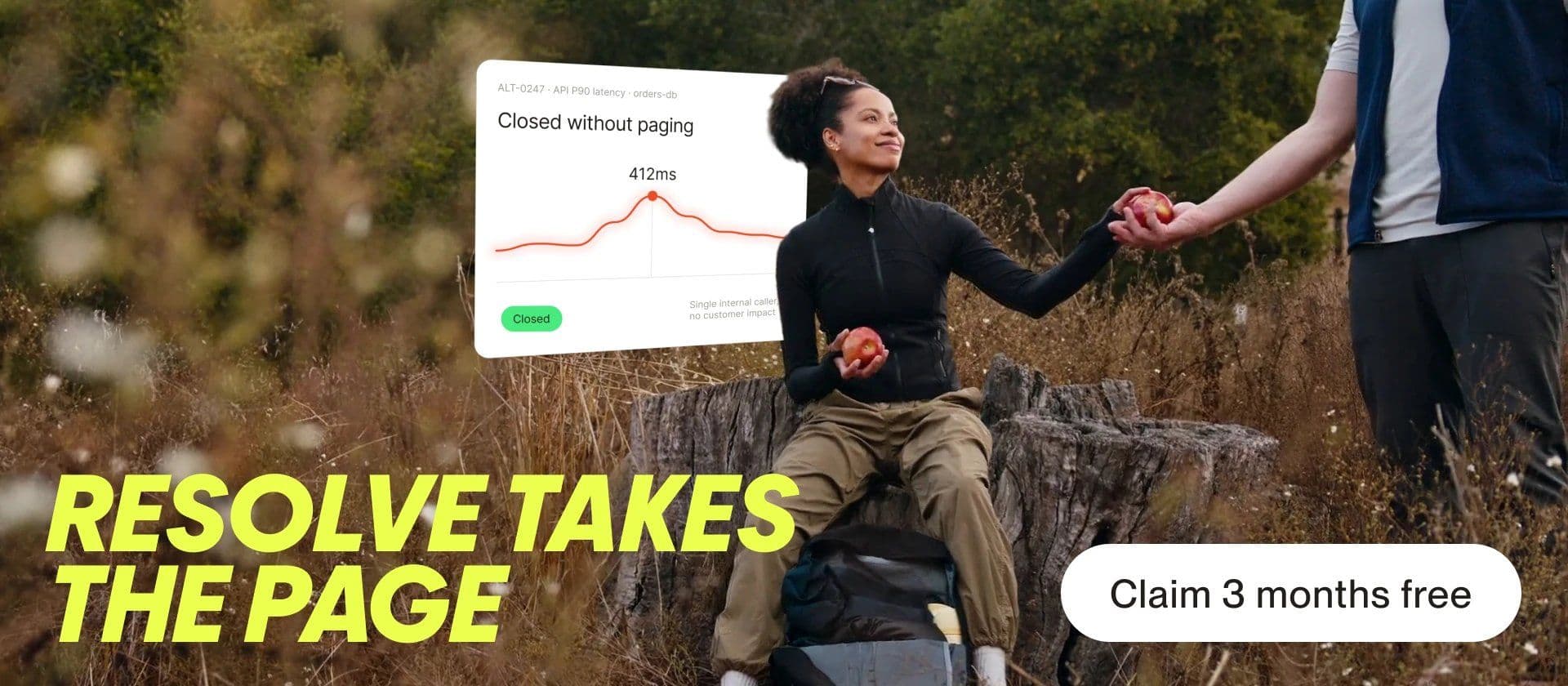
Why should engineers still be on call? Agents you trust should take the pages, close them autonomously, drive incidents to resolution, and even fix the underlying issues behind them. Trusting agents on this critical path for production reliability comes down to four primitives: does it know production better than any single tool or team, does it deliver frontier SRE quality, can it be trusted to act on your behalf, and do the costs stay in check.
Steven Karis, Chief Architect at ResolveAI, shows how each primitive shapes an SRE agent that owns on-call and improves reliability autonomously. Engineering leaders from Figma and Autodesk join him to walk through how their teams are using agents to run on-call and drive reliability.
Trusting an AI SRE to own reliability outcomes is a different decision from trusting an agent in a chat window. On the critical path, it works on every alert and ticket, not only the few that reach a person, and getting to root cause is no longer enough. It has to know what production looks like right now, reach the right answer fast enough to act on, work inside the controls you already have, and run at a cost that holds up at that volume.
It also has to get better each time, because every agent shares one memory of what the last investigation found. That is what turns on-call into something wider: changes checked after they ship, drift caught before it pages anyone, and the backlog nobody has time for finally worked. Engineering leaders from SAP and Cisco describe what that took across their business units, and how a pilot became an AI-led reliability transformation.